Mary Robinson Climate Conference June 2024
We are hosting a session on food systems and climate change at the Mary Robinson Climate Conference on 5th June in Ballina, Co. Mayo. Aileen Wynne from GOAL Global, Sean Owens from the Irish Climate and Health Alliance, and Daisy Gallagher from the CULTIVATE project at Trinity College Dublin will join us.
Global food systems – the complex networks of actors and actions involved in food production, processing, distribution and consumption – are responsible for one-third of anthropogenic greenhouse gas emissions, immense biodiversity loss, environmental pollution and natural resource degradation – transgressing boundaries for planetary health. With 750 people facing hunger, 3 billion people unable to afford a healthy diet, and one third of the world’s population affected by overweight and obesity, it is clear that food systems are also failing human health. Furthermore, they are characterised by gross inequalities, corporate power concentrations and uncoordinated institutions for governance.
In this session, we discuss how our food systems are contributing to climate change and how climate change is affecting food security. We delve into how effectively the food systems community is responding to the climate crisis, and why food systems are viewed as one of six critical themes to accelerate progress on the SDGs.
College research day
May 2024

Nicole Olweean presented an update on her systematic scoping review looking at tools and interventions used among citizens, internationally, to support them in sustainable food practices.
The PRISMA-ScR extension protocol was used to identify existing interventions aimed at promoting attitude and/or behaviour change in citizens toward sustainable food practices. Search terms were developed with input from an interdisciplinary team of authors. We searched Scopus, Web of Science, and GreenFILE for studies published between 2019, when the landmark EAT-Lancet report on human and planetary health was launched, and the day the search was completed (February 29, 2024).
Our search returned 19,410 records, with 17,042 removed (7,236 duplicates and 9,806 not relevant in topic) during initial screening, leaving 2,368 selected for further screening. Examples of variables for data extraction include: location; participant characteristics; setting; study design; food themes (e.g. food choice, food type); intervention mechanism; measured outcomes; and findings. Results indicate that participants tend to be located in developed countries and part of distinct groups (e.g. students), interventions focus on food choice, food waste, and willingness to act, and outcomes include changes in knowledge, attitudes, and behaviour. Screening is ongoing and will be completed by June 2024.
IFST 60th anniversary
May 2024

The Institute for Food Science and Technology (IFST) are celebrating their 60th anniversary this year, and what better way to celebrate that put the spotlight on two food groups that have been foundational in nutrition and health research over the past decade – milk and bread.
Anne Mullen joined Ian Givens from the University of Reading and Martina Rooney from University College Dublin in a webinar on dairy. Anne spoke about global consumption trends in dairy, the clear-cut story of nutrition and health benefits associated with dairy – focusing on key life stages of early childhood, adolescents, pregnancy and older age – but challenges we face in communicating the evidence base including Nutrition and Health Claims regulations, fair-weather media and trumped-up reporting of science, activism and missed opportunities in rationalising sustainability messages with human health.
FAO sustainable livestock
Oct 2023
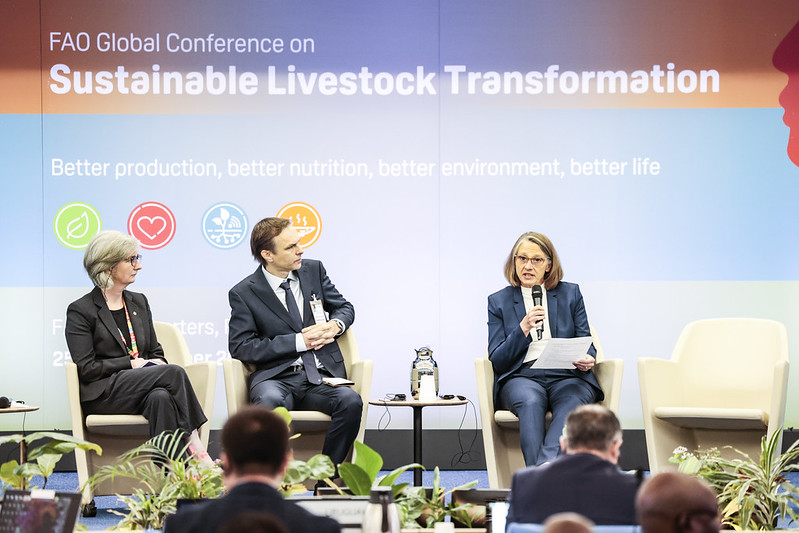
FAO held it’s first Global Conference on Sustainable Livestock Transformation at their headquarters in Rome from 25th to 29th October 2023. The conference brought together representatives of FAO Members, producer organizations, research and academic institutions, development agencies, civil society organizations and private sector bodies to address the challenge of how produce nutritious, safe and accessible animal source food, promote a vibrant, local and diversified livestock systems, with reduced environmental footprints and greater resilience to shocks and disruptions.
Anne Mullen from the Ryan Institute at the University of Galway joined Frédéric Leroy from Vrieje Universiteit Brussel and Lynnette Neufeld, Director of FAO’s Food and Nutrition Division for a panel discussion in the Better Nutrition session. Dr Mullen spoke about how, despite the evidence base, misconceptions about the nutrition and health benefits of dairy persist, with citizens receiving mixed messages. Anne also called for vigilance around the capture of and potential for further misconceptions with the term ‘plant-based’ for processed foods, and reminded the audience that ‘plant-based’ diets promoted for human and planetary health do not exclude animal source foods.
Sustainable food systems and the SDGs
Oct 2023
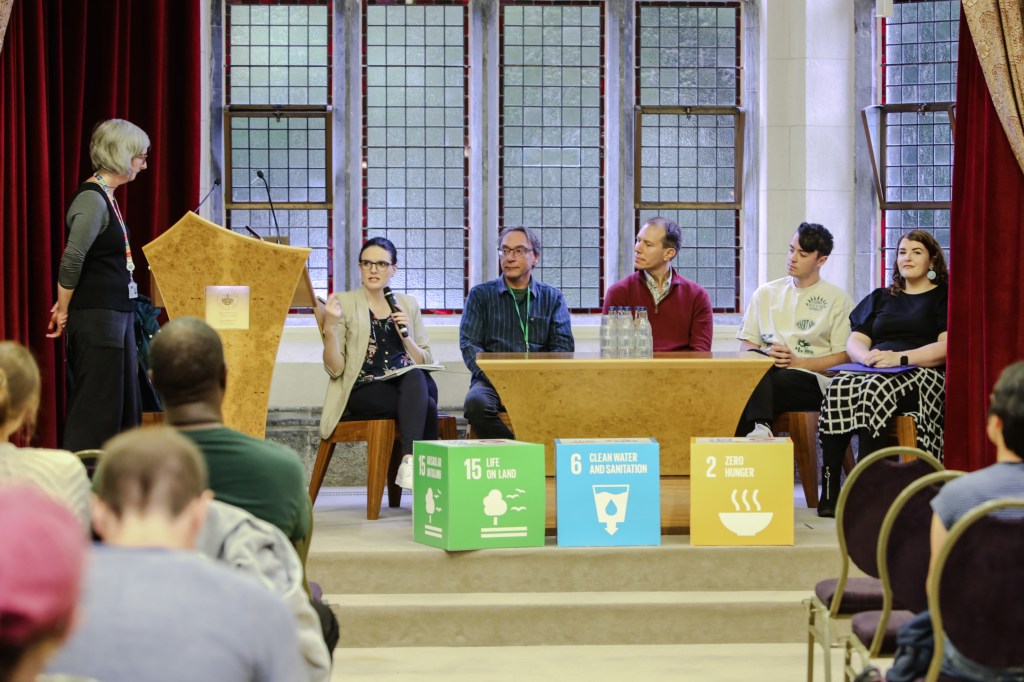
Sustainable development of food systems and the SDGs was discussed at a recent event held by the School of Biological and Chemical Science during the University of Galway’s inaugural SDG week. The Sustainable World Section of the School convened an audience of staff and students from across the University to discuss the risks that today’s food systems pose to human and planetary health, technological and scientific solutions – and the greatest challenge of all, humanity’s willingness to change.
Read more in Cois Coiribe.
 Food Systems Lab